A weekly newsletter sounds simple until you try to run it properly while also doing client work, building agents and keeping the rest of the business moving.
The first version of my newsletter workflow was too proud of its own autonomy. It could research, draft, format and send with very little human input. That was technically interesting, but it was also the wrong lesson to take from the build.
The useful version is more disciplined: the agent does the repetitive work, then prepares a clear approval packet before anything external happens.
That is the system I now care about.
The problem
I wanted a weekly AI marketing briefing that did three jobs.
- Surface the most useful AI and marketing developments from the previous week.
- Turn them into a short briefing in my voice.
- Publish the same thinking as a website post where it can support search, AEO and future client conversations.
The manual version was obvious: block out time every week, read around the market, draft the newsletter, edit it, build the MailerLite campaign, create the blog post and publish.
That works for a few weeks. Then client work gets busy and the system slips.
So I built the first version as an agentic workflow.
The stack
The current workflow uses a small set of tools.
- Hermes runs the scheduled agent on the VPS and handles the tool calls.
- Tavily provides current web research with source URLs.
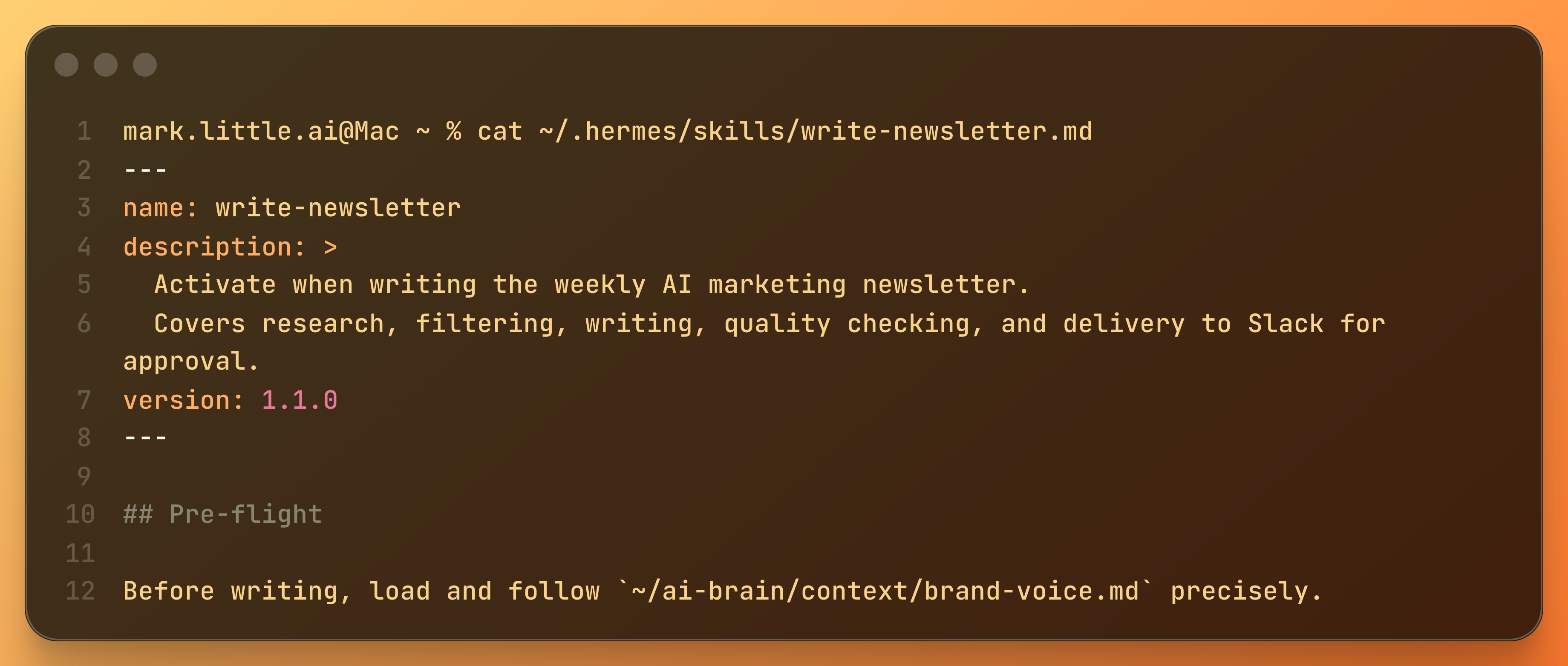
- Mark OS holds the voice, process notes, approved examples and publishing rules.
- MailerLite handles the email campaign.
- GitHub and Vercel publish the article version to the website.
The stack is not the interesting part. The operating rules are.
The workflow
The agent starts with research. It looks for current AI and marketing stories from the previous seven days, then rejects items that are only product announcements, press releases or vague hype.
The output is a short source packet: what happened, why it matters for a founder or marketing director, and the original URL.
The next step is drafting. The agent uses the source packet, the site positioning, previous writing examples and the newsletter format to produce one concise edition rather than a menu of options.
Then the evaluator runs. It checks for weak claims, missing sources, generic AI language, overlong sentences and anything that sounds like it came from a marketing automation vendor rather than from me.
Only after that does the system prepare the approval packet.
That packet has to show:
- the final newsletter copy;
- the source URLs behind each claim;
- the subject line;
- the MailerLite campaign status;
- the blog title, excerpt and metadata;
- the exact action waiting for approval.
This is the important line: the agent can prepare the send. It does not get to treat a vague positive reply as permission to publish.
Why the approval gate matters
The first instinct with agentic marketing is to chase full autonomy. That is the wrong goal for external publishing.
A useful content agent should remove the labour from research, drafting, formatting and routing. It should not remove human judgement from the moment where the business puts its name on something.
The approval gate is where the workflow becomes commercially usable.
A loose approval loop creates the illusion of efficiency. A clear approval loop creates trust. For newsletters, LinkedIn posts, website updates and outreach, trust matters more than shaving another five minutes from the process.
What the agent actually saves
The saving is broader than writing time.
The agent removes the recurring setup work: finding stories, keeping source links attached, checking against previous editions, creating the MailerLite payload, preparing the blog version and giving me one decision rather than ten small tasks.
That matters because the bottleneck in founder led marketing is rarely idea generation. The bottleneck is consistent execution.
A small team can publish more often if the system does the boring preparation work and the human only has to apply judgement at the right point.
What I learned
Filtering matters more than generation. The quality of the newsletter depends on what the agent rejects before drafting. A better filter produces a better briefing.
Voice needs examples, not slogans. A voice guide helps, but approved examples and feedback logs do more work. The agent needs to see what has survived editing.
State needs to live outside chat. The approved version, source packet, status and publishing target need to be stored somewhere durable. Chat history is not an operating system.
Autonomy is not the selling point. The selling point is a reliable workflow that turns market intelligence into useful content every week without creating reputational risk.
Want this built for your team?
This is the kind of system I build as a fractional CMO: practical marketing infrastructure, running on your tools, in your voice, with the approval gates your brand actually needs.
If you want a content agent, lead intelligence workflow, AEO monitoring system or broader agentic GTM stack, book a discovery call and we can scope the first useful version.
The first build does not need to be large. It needs to work, get used, and improve every week.
Want this built for your business?
Practical marketing infrastructure, running on your data, in your voice, with approval gates where they matter.
Book a discovery call